Showing posts with label #WednesdayBibleStudy #BibleStudy. Show all posts

Wednesday, March 19, 2025

Bible Study - Feast of St. Joseph


Feast of St. Joseph

Saint Joseph is one of the most humble yet powerful figures in salvation history. Though the Gospels record no words spoken by him, his faith, obedience, and devotion speak volumes.

Today, as we honor him on this feast day, we reflect on his role in God’s divine plan, his unwavering trust in God’s promises, and his example of fatherhood and leadership.

I. Joseph and God's Covenant with David (2 Samuel 7:4, 8-16)

A. The Promise to David

  • In 2 Samuel 7, God makes a covenant with King David, saying:

“Your house and your kingdom will endure forever before me; your throne will be established forever.” (2 Samuel 7:16)

  • This was ultimately fulfilled in Jesus Christ, the Son of David, whose kingdom is eternal.

B. Joseph’s Role in the Fulfillment of This Promise

  • Joseph was a descendant of David, making him part of this divine covenant.
  • Though not the biological father of Jesus, he was Jesus' legal father, ensuring His connection to David’s lineage.
  • His obedience to God’s call protected and guided Jesus, leading to the fulfillment of the messianic prophecy.

Joseph may not have fully understood his role at first, but he trusted and obeyed God’s will. Are we willing to trust God, even when we don’t see the full picture?

II. Joseph’s Faith Compared to Abraham’s (Romans 4:13-18)

A. Abraham’s Faith in God’s Promise

  • Paul highlights that Abraham was justified by faith, not by the law.
  • He trusted God’s promise that he would be the father of many nations, even though it seemed impossible.

B. Joseph’s Faith in God’s Plan

  • Like Abraham, Joseph was called to believe in the impossible:
    • He believed that Mary’s child was conceived by the Holy Spirit.
    • He obeyed God’s command to flee to Egypt to protect Jesus.
    • He remained faithful in raising and guiding Jesus, despite hardships.

True faith means trusting in God even when we don’t understand His plan. Like Joseph, do we obey God’s will without hesitation?

III. Joseph’s Role as a Loving and Responsible Father (Luke 2:41-52)

A. The Boy Jesus in the Temple

  • At age 12, Jesus remained in the temple to discuss Scripture with the teachers.
  • Mary and Joseph searched for three days in distress.
  • Jesus responded:

“Didn’t you know I had to be in my Father’s house?” (Luke 2:49)

B. The Example of Fatherhood

  • Though Jesus is the Son of God, He was raised and nurtured by Joseph’s love and guidance.
  • Joseph was a protector, provider, and teacher:
    • He taught Jesus carpentry and raised Him in faith.
    • He modeled righteousness and devotion.
  • He shows us that fatherhood is more than biology—it is about love, leadership, and sacrifice.

Joseph protected and guided Jesus on earth. How can we be spiritual leaders and mentors to those in our care?

IV. Trusting in God's Faithfulness (Psalm 89:1-29)

A. God’s Faithfulness Through Generations

  • This psalm celebrates God’s unchanging love and promises.
  • It reminds us that, even when human leaders fail, God remains faithful to His covenant.

B. Joseph’s Quiet Trust in God

  • Joseph never sought fame or recognition—he lived in humble obedience to God.
  • Though he faced uncertainties, he never doubted God’s faithfulness.
  • Like David and Abraham, Joseph played a part in God’s divine plan, showing us that God works through ordinary people with extraordinary faith.

Are we trusting in God’s faithfulness, even in difficult times? Like Joseph, do we have the courage to follow God’s call, even when it is hard?

Lessons from Saint Joseph

1. Trust in God’s Plan

Joseph didn’t understand everything, but he trusted and obeyed. We, too, must walk by faith.

2. Lead with Love and Integrity

Joseph was a loving husband to Mary and a devoted father to Jesus. Families today need strong, faithful leaders like him.

3. Serve Humbly

Joseph never sought recognition. His life teaches us that true greatness comes from serving faithfully in the background.

Challenge:

  • Are you trusting God’s promises, even when you don’t see the outcome?
  • Are you leading your family in faith, like Joseph did?
  • Are you serving humbly, even when no one notices?

Let us follow the example of Saint Joseph, trusting in God’s plan, living with faith, and leading with love.


Wednesday, March 12, 2025

Bible Study - The Call to True Repentance


The Call to True Repentance

Lent is a time of self-examination, repentance, and renewal. It reminds us of:

  • Our need to turn away from sin and return to God.
  • God’s mercy and willingness to forgive when we truly repent.
  • The importance of a sincere and transformed heart before God.

Our readings today focus on true repentance, using the example of Nineveh, Jesus’ rebuke of an unrepentant generation, and David’s deep cry for mercy in Psalm 51.

Main Themes for Today’s Sermon:

  1. The Power of Repentance (Jonah 3:1–10)
  2. Jesus Calls for True Repentance (Luke 11:29–32)
  3. A Prayer of True Repentance (Psalm 51:11–18)


I. The Power of Repentance (Jonah 3:1–10)

A. Jonah’s Second Chance and Nineveh’s Response

“The word of the Lord came to Jonah a second time: ‘Go to the great city of Nineveh and proclaim to it the message I give you.’” (Jonah 3:1-2)

  • Jonah had previously run from God, but after being swallowed by the fish, he was given a second chance.
  • He obeyed and proclaimed:

“Forty more days and Nineveh will be overthrown.” (Jonah 3:4)

B. The Power of a Nation’s Repentance

“The Ninevites believed God. A fast was proclaimed, and all of them, from the greatest to the least, put on sackcloth.” (Jonah 3:5)

  • Even the king humbled himself, covering himself in sackcloth and sitting in ashes.
  • Their actions reflected a genuine turning away from evil.

C. God’s Mercy in Response to Repentance

“When God saw what they did and how they turned from their evil ways, he relented and did not bring on them the destruction he had threatened.” (Jonah 3:10)

  • Repentance moves the heart of God.
  • God’s judgment is real, but so is His mercy when we turn back to Him.

Am I truly repenting, or just going through religious motions?


II. Jesus Calls for True Repentance (Luke 11:29–32)

A. The Danger of Seeking Signs Without Faith

“This is a wicked generation. It asks for a sign, but none will be given it except the sign of Jonah.” (Luke 11:29)

  • The people demanded miraculous signs, yet they ignored the greatest sign—Jesus Himself.
  • Jesus compares Himself to Jonah:
    • Jonah’s message led Nineveh to repent.
    • Jesus’ message is even greater, but many rejected it.

B. The Warning of Judgment

“The men of Nineveh will stand up at the judgment with this generation and condemn it; for they repented at the preaching of Jonah, and now something greater than Jonah is here.” (Luke 11:32)

  • The people of Nineveh responded to Jonah, a reluctant prophet.
  • Yet, many in Jesus’ time refused to repent despite seeing God’s own Son.

C. The Urgency of Repentance Today

  • We too have heard God’s Word—how are we responding?
  • True repentance is not just about feeling sorry but about changing our ways and turning back to God.

Am I truly responding to Jesus’ call to repentance, or am I waiting for another "sign"?


III. A Prayer of True Repentance (Psalm 51:11–18)

A. David’s Cry for God’s Mercy

Psalm 51 is a deep cry of repentance from David after his sin with Bathsheba.

“Do not cast me from your presence or take your Holy Spirit from me.” (Psalm 51:11)

  • David acknowledges that sin separates us from God.
  • He longs for restoration and renewal.

B. The Heart of True Repentance

“You do not delight in sacrifice, or I would bring it; you do not take pleasure in burnt offerings.” (Psalm 51:16)

  • True repentance is not about outward rituals—it is about a broken and contrite heart.
  • God desires a transformed heart, not just religious acts.

C. The Promise of Renewal

“Restore to me the joy of your salvation and grant me a willing spirit, to sustain me.” (Psalm 51:12)

  • Repentance leads to restoration—God renews us and fills us with joy.
  • Lent is a time to seek that renewal and return to our first love—Jesus Christ.

Do I have a broken and contrite heart before God, or am I just going through religious routines?


How Should We Respond in Lent?

As we reflect on today’s readings, let us take repentance seriously:

Like Nineveh, let us humble ourselves and turn away from sin.
Like Jesus warned, let us stop waiting for “signs” and respond now.
Like David, let us pray for a pure heart and the joy of salvation.

Lenten Challenge:

  • What sins or distractions do I need to turn away from?
  • How can I make my repentance sincere and not just routine?
  • How can I use this season to grow deeper in my faith and commitment to Christ?


Wednesday, February 12, 2025

Bible Study - Repentance


Repentance – A Call to Turn Back to God

Repentance is a foundational theme in the Bible, calling people to turn away from sin and return to God. It is not just feeling sorry but involves a complete transformation of heart, mind, and actions.

Acts 3:19 – “Repent, then, and turn to God, so that your sins may be wiped out, that times of refreshing may come from the Lord.”

The Bible uses two primary words for repentance:

Hebrew (Old Testament): Shuv – Meaning "to turn back" or "return." (Ezekiel 18:30)

Greek (New Testament): Metanoia – Meaning "a change of mind" that leads to a change in behavior. (Matthew 3:8)

True Repentance is Genuine sorrow for sin (2 Corinthians 7:10), A complete turning from sin to God (Acts 26:20) and it Leads to transformation (Romans 12:2)

False Repentance is Feeling guilty but not changing (Matthew 27:3-5 - Judas) and Regret due to consequences, not love for God (Exodus 9:27-30 - Pharaoh)

It is Commanded by God

  • Mark 1:15 – “Repent and believe the gospel.”
  • Acts 17:30 – “God commands all people everywhere to repent.”

It is required for Salvation

  • Luke 13:3 – “Unless you repent, you will all likewise perish.”
  • 2 Peter 3:9 – “God is patient… not wanting anyone to perish, but everyone to come to repentance.”

Steps to True Repentance

A. Recognizing Sin

  • Psalm 51:3 – “For I know my transgressions, and my sin is always before me.”
  • Acknowledging our sin before God is the first step.

B. Feeling Godly Sorrow

  • 2 Corinthians 7:10 – “Godly sorrow brings repentance that leads to salvation and leaves no regret.”
  • Genuine repentance comes from a broken heart. (Psalm 51:17)

C. Confession of Sin

  • 1 John 1:9 – “If we confess our sins, He is faithful and just to forgive us.”
  • Confession must be sincere and specific.

D. Turning from Sin & Changing Behavior

  • Isaiah 55:7 – “Let the wicked forsake his ways and the unrighteous their thoughts.”
  • Acts 26:20 – “Repent and turn to God, performing deeds in keeping with repentance.”

Biblical Examples of Repentance

A. The Prodigal Son (Luke 15:11-32)

  • He recognized his sin (v. 17).
  • He confessed to his father (v. 18-19).
  • He returned home and changed his ways (v. 20).
  • The father welcomed and restored him (v. 22-24).

B. King David (Psalm 51)

  • After his sin with Bathsheba, David repented sincerely.
  • He prayed, “Create in me a clean heart, O God” (Psalm 51:10).

C. Nineveh (Jonah 3:5-10)

  • The people repented after Jonah’s warning.
  • God showed mercy and spared them.

The Blessings of Repentance

  1. Forgiveness of sins (Acts 3:19)
  2. Restoration of relationship with God (Luke 15:22-24)
  3. Spiritual renewal and joy (Psalm 51:12)
  4. Freedom from sin’s power (Romans 6:6)


A Daily Life of Repentance

Repentance is not just a one-time event; it’s a daily practice.

🔹 Luke 9:23 – “Whoever wants to be my disciple must deny themselves and take up their cross daily and follow me.”

🔹 1 Corinthians 10:12 – “If you think you are standing firm, be careful that you don’t fall!”

Practical Steps:

Examine your heart daily (Psalm 139:23-24)
Confess sins immediately (1 John 1:9)
Live by the Spirit (Galatians 5:16)

God’s grace is available to all who turn to Him. Will you repent today and follow Jesus with all your heart?

🔹 Isaiah 1:18 – “Though your sins are like scarlet, they shall be as white as snow.”

Wednesday, February 5, 2025

Bible Study - Dual nature of Jesus Christ


Dual nature of Jesus Christ

One of the most profound mysteries of the Christian faith is the dual nature of Jesus Christ—He is fully God and fully man. This truth is central to our understanding of salvation, as it reveals how Jesus could bridge the gap between a holy God and sinful humanity. 

The Bible clearly teaches that Jesus is divine. He is not merely a good teacher or prophet; He is God in the flesh.

John 1:1-3: "In the beginning was the Word, and the Word was with God, and the Word was God... All things were made through Him."

Colossians 2:9: "For in Christ all the fullness of the Deity lives in bodily form."

Proofs of His Deity

He forgave sins (Mark 2:5-7), He controlled nature (Matthew 8:23-27) and He accepted worship (Matthew 28:9, John 20:28).

Since Jesus is God, He has the power to save, authority to forgive, and worthiness to be worshiped.

At the same time, Jesus is fully human. He experienced life as we do, yet without sin.

John 1:14: "The Word became flesh and made His dwelling among us."

Hebrews 2:17: "He had to be made like His brothers in every way, that He might become a merciful and faithful High Priest."

Proofs of His Humanity

He was born – Luke 2:7 (Born of Mary in Bethlehem), He grew and learned – Luke 2:52 (Jesus grew in wisdom and stature), He experienced human emotions - He wept (John 11:35), He felt sorrow and anguish (Matthew 26:38), He felt joy (Luke 10:21) and He suffered and died – Matthew 27:50 (On the cross, Jesus physically died).

Since Jesus is human, He understands our struggles, represents us before God, and died for our sins.

Jesus’ dual nature is essential for our salvation. As God, He has the power to save; as man, He can represent us and take our place.

Philippians 2:5-8: Jesus humbled Himself, taking on human form and obeying to the point of death on the cross.

Hebrews 2:14-15: By sharing in our humanity, Jesus defeated death and freed us from the fear of it.

Jesus Christ, fully God and fully man, is the cornerstone of our faith. His divinity ensures His power to save, and His humanity allows Him to sympathize with our weaknesses. Acknowledge Jesus as both Lord and Savior, fully God and fully man. Because He understands our struggles (Hebrews 4:15), we can approach Him with confidence. Proclaim the good news of Jesus, who bridges the gap between God and humanity.

Jesus Christ is not just part God and part man—He is fully God and fully man.

As God, He has the power to save.

As Man, He represents us and takes our place.

Because of this, we can trust Him, worship Him, and follow Him with confidence.

May The Lord Bless You!

Sunday, January 19, 2025

Message - Second Sunday after Epiphany


First Miracle of Jesus

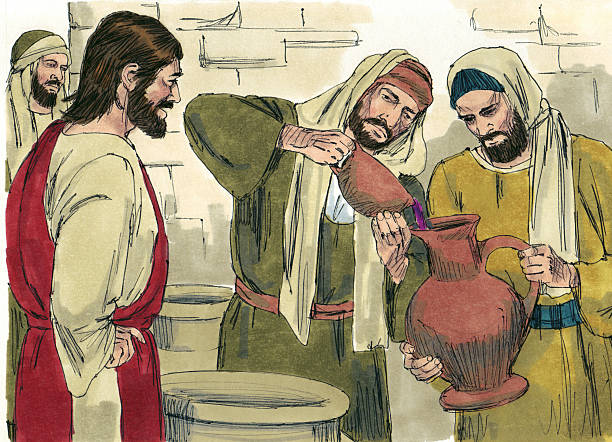
The first miracle of Jesus—turning water into wine at the wedding in Cana (John 2:1-11)—is a powerful sign of God’s provision, transformation, and the joy found in Christ. This miracle also reflects the work of the Holy Spirit, whose gifts enable believers to serve and glorify God

Just as Jesus transformed ordinary water into exquisite wine, He can transform our lives. He can take our brokenness, our struggles, and our limitations and turn them into something beautiful and meaningful.

The miracle at Cana wasn't about scarcity, but about abundance. Jesus provided more than enough, ensuring that the celebration could continue joyfully. This reminds us that God's blessings are overflowing and that we can trust in His provision.

The wedding feast was a time of celebration, and Jesus' miracle enhanced that joy. This reminds us that God desires us to experience joy and fulfilment in our lives.

Just as Jesus performed miracles through His own power, He empowers us to live abundant lives through the gifts of the Holy Spirit. These gifts, such as wisdom, knowledge, faith, healing, and love, are not meant to be hoarded but to be shared with the world.

The Holy Spirit gives us the strength and courage to overcome challenges, to love others unconditionally, and to be witnesses of God's love in the world.

The gifts of the Spirit can transform us into the people God created us to be, enabling us to live lives of purpose and meaning.

Just as the miracle at Cana provided an abundance of wine, the gifts of the Spirit offer us an abundance of grace, love, and joy.

The miracle at Cana and the gifts of the Holy Spirit are a reminder that God desires to bless us abundantly and to empower us to live lives of joy, purpose, and meaning. Let us open our hearts to His grace and allow Him to transform us and use us to bless the world.


Bible Study - Commandments


 Commandments

Commandments are foundational to understanding God’s covenant with His people. They were given to Moses on Mount Sinai (Exodus 20: 1-17) as a moral and spiritual guide for living in obedience to God and in harmony with others. These commandments remain timeless principles for a life that honours God and promotes justice and love.

When God created man, He gave certain commandments to the man and wrote it in his heart (Romans 2: 14, 15). Accordingly at the time of Moses, God wrote the commandments in two tablets and gave it to him. “Then the Lord delivered to me two tablets of stone written with the finger of God, and on them were all the words which the Lord had spoken to you on the mountain from the midst of the fire in[c] the day of the assembly” – Deuteronomy 9: 10.

Summary of the first tablet is you need to love your God with all your heart and soul (Matthew 22: 37) and of the second tablet is you need to love your neighbour as yourself (Matthew 22: 39). Summary of all the commandments is “LOVE”. It is given to you, me and everyone.

The commandments show us that God is the creator and redeemer and the commandments are given for our good. According to the commandments we are called to live holy lives, reflecting God’s character in our actions. Living according to the Ten commandments reflects our commitment to God’s holiness and truth in our daily lives.

May The Lord enable you to study the commandments, know about the truth and live accordingly.

May The Lord bless you!


Wednesday, January 8, 2025

Bible study - About the Laws


Law shows us that we are lost because of our sins. Whatever God has written in the law, we have disobeyed it and that disobedience in sin, and the penalty for sin is eternal death.

“For there is not a just man on earth who does good and does not sin” – Ecclesiastes 7: 20.

In fact, in the Old Testament the blessing and curses God gave to His people, Israel, He warns them that the ones who disobeys the laws, curses will be upon them and their generations.

Traffic Laws are given to the citizens to obey, so that everyone will have a safer travel. It decreases the accidents and people will be much safer than when there are no rules. Same way, the Laws of life that has been given to us by God is to make sure that we have a healthy and a blessed life.

Those who obey God’s commandments and Laws will be blessed physically, spiritually and financially. “Godliness is profitable for all things, having promise of the life that now is and of that which is to come” – 1 Timothy 4: 8. God loves the ones who try to obey His laws, and so He can bless them for generations.

God wants us to obey all His commandments. He wants us to obey all, not only in our actions but in our hearts also. “Therefore, you shall be perfect, just as your Father in heaven is perfect” – Matthew 5: 48. But because of sin, no one is able to obey Lord’s commandments fully. “They have all turned aside, they have together become corrupt; There is none who does good, No, not one” – Psalm 14: 3. Noone is righteous according to the Law.

But commandments and Laws are actually good for mankind. It helps us to live life carefully. Especially it helps us to know about the sins. It is almost like a mirror for us to see and evaluate our life. “I would not have known sin except through law. For I would not have known covetousness unless the law had said, you shall not covet” – Romans 7: 7.

Laws tech us how to live a life pleasing to God.

“How can a young man cleanse his way? By taking heed according to Your word” – Psalm 119: 9.

So, it is important to study each commandment thoroughly. With that we will understand the heart and desires of God and we will be able to try and live a life pleasing to Him.

May The Lord bless you!

Wednesday, January 17, 2024

Bible Study - Literature Study


The writers of the Bible chose their words and arranged them to fit their purposes. You’ll be better able to see the main idea in a passage of scripture and better understand the writer’s purpose when you can identify the style or manner of expression.


Literal Language

The writers wrote about reality, and most often, they used language that is literal or factual.

When we read, “Jesus went out to a mountainside to pray” (Luke 6: 12), we know that this is literally or actually what He did. When He ordered the fever to leave someone and it lift (Luke 4: 39), this is the literal truth.

Figurative Language

Figurative language is made up of figures of speech. These are words or phrases that help us understand something hard to explain by relating it to something we know about. John gave us a mental picture of Christ as a lamb being offered on an alter for our sins. This helps us understand Christ’s purpose in coming to the world.

Jesus compared himself to life-giving water. He also compared himself to bread, light and a shepherd. These figures of speech help us to remember particular truths.

Christ often used figurative language when He talked to His followers. He told them simple stories to help them understand important spiritual truths. Christ tells the story of the lost sheep (Matthew 18: 10-14). In comparison He teaches that He is as concerned about each one of us as a shepherd is about a lost sheep.

Symbols

Some figures of speech are called symbols. They represent truth about something. The words light, salt and sheep are symbols of Christians. In the Lord’s supper, the bread and cup are symbols of Christ’s body and blood. They remind us of Christ’s death and suffering for our salvation.

May The Lord help you to find literal and figurative language while you study the word, and let it open doors for you to explore more about the real meaning and truth in Jesus’ name, Amen.

Wednesday, January 10, 2024

Bible Study - Facts about The Bible


 The word “Bible” came from the Greek word biblia, which means “book”.

We can receive blessing and instruction from reading the Bible, even though we do not understand it completely. But the full joy of the Bible knowledge comes only with serious study. Therefore, we need to have some basic information.

Who wrote the Bible?

About 40 men wrote the Bible during a period of about 1600 years. Even though different writers were involved, Bible tells us that supernatural God guided or inspired the men to record His dealings with humanity.

Inspiration, in reference to the Bible, is the actual “breathing in” of God’s Spirit to guide the thoughts of the writers. (“All scriptures are God-breathed” – 2 Timothy 3: 16). Some did not fully understand what they wrote, especially concerning prophecies yet to be fulfilled, others studied their topics. They even wrote about their own experiences. (Ephesians 3: 3,5).

When we accept the authority of God’s Word, we can study it with greater understanding. We no longer just say it is God’s Word and forget about it, we respond to it as the real, living Word of God, which transforms our lives.

How it started?

Before there was no written word, God spoke to people. He called Abraham and told him that through him and his descendants all the world would be blessed. Out of that nation God chose certain men to write His revelation.

God inspired Moses to write a revelation that would explain the creation of the earth and gave laws, promises and prophecies. Thus, Moses wrote a set of books to which other holy men of God added writings. Many copies of the first writings do exist today (stones, clay tablets, skins, scrolls).

God wants us to understand His message. He had the Old Testament writers use Hebrew so that Hebrew people could understand them. The New Testament writers used Greek, which was the common language of Jesus’ day. Today, the Bible has been translated into more than 1300 languages, so that more people can understand the message of God.

They work in Unity

The 66 books of Bible (not Catholic Bible) are divided into the Old Testament with 39 books and New Testament with 27 books. Yet they are one history and one story.  The main idea of each book is God’s plan of redemption for humanity. The Old Testament predicts what will happen in the New Testament and the New Testament explains and fulfils the old covenant. Thus, they work in unity. Both were written under the inspiration of the Holy Spirit.


The central figure of both Testaments is Christ. Each book shows Him in a special way.

The word testament means “agreement”. Old Testament reveals God’s agreement with man about his salvation before Christ came. This was based on the laws God gave Moses to write down. New Testament is God’s agreement with humans after Christ came. It is based on God’s grace, which is His complete love for humanity. God sent His son to die and rise again so that we can have the gift of salvation.

In Old Testament people had to sacrifice animals each year to keep paying for their sins (Hebrews 10: 4-7, 10, 14)

In New Testament Christ was the ultimate sacrifice for our sins and Christ paid it all fully. There is no need for any other sacrifice. All we have to do is accept God’s gift of His son Jesus Christ (Galatians 4: 4).

Bible also shows us the beginning with the creation of world and man and ends of with revelation of ending the life on the earth. Between these two books is the story of how God worked out humanity’s salvation so that we can enjoy eternal life. This is also called Progressive Revelation.

Pray and try to study this Book and see how the history progresses from sin to salvation and to eternity. May The Spirt of God guide you in your study.

Wednesday, January 3, 2024

Bible Study - Why you need to study the Bible?


“My son, if you accept my words and store up my commands within you, turning your ear to wisdom and applying your heart to understanding-indeed, if you call out for insight and cry aloud for understanding, and if you look for it as for silver and search for it as for hidden treasure, then you will understand the fear of the Lord” – Proverbs 2: 1-5


What is God’s will for us?

God’s will for us is that we love Him above else. When we truly love someone, we want to know about them more. Same way when we truly love God, we want to spent time getting to know Him. One way to do this is by reading and studying His Word.

Our relationship with God depends upon our obedience to His commands. The only way we can obey Him is to know what His commands are.

To do God’s will we need to have wisdom and understanding and for that we must study His Word. Studying God’s word is easier when we ask the Holy Spirit to help us. “When He, The Spirit of truth comes, He will guide you into all truth. He will not speak on His own; He will speak only what He hears, and He will tell you what is yet to come” – John 16: 13

What are our needs?

Since God made us, He knows our needs better than we know them. We always need repairing, teaching, correcting and reshaping. The Word of God is the only instrument equipped to make the repairs. The teachings of the Bible guide us in our growth and describe God’s will for our daily living.


Word of God helps us know the truth about our salvation. It teaches us what our heritage in Christ is. It gives us strength and power through Christ. It discusses how to be filled with the Holy Spirit and provides joy and peace that come from God. It directs us to live holy lives.

Word of God shows us when our desires are against God’s will. It helps us shape our thoughts to be like His. The more we read and study the Bible and listen to the Holy Spirits teaching us, the more we are able to know and do God’s will. As we study, we take off our old self with its practices and have put on the new self (Colossians 3: 1-10).

How are you going to approach The Word?

We must approach God’s Word in an attitude of obedience. Our attitude must include discipline. We cannot expect God to reveal things to us unless we make a real effort to learn. We need to spend time in careful study. For our study to change our lives, we must be teachable and be willing to receive our heavenly Father’s instruction. When we are teachable, we approach God’s Word humbly.

We can never learn everything in God’s Word, but as we continue to learn, Holy Spirit reveals God’s truth to us. Hope you will spend time to pray before reading so that the Spirit of God, the author of Bible will be able to help you according to your need.

May God bless you.