Showing posts with label #Sunday #message #NewYear #HappyNewYear. Show all posts

Wednesday, March 19, 2025

Bible Study - Feast of St. Joseph


Feast of St. Joseph

Saint Joseph is one of the most humble yet powerful figures in salvation history. Though the Gospels record no words spoken by him, his faith, obedience, and devotion speak volumes.

Today, as we honor him on this feast day, we reflect on his role in God’s divine plan, his unwavering trust in God’s promises, and his example of fatherhood and leadership.

I. Joseph and God's Covenant with David (2 Samuel 7:4, 8-16)

A. The Promise to David

  • In 2 Samuel 7, God makes a covenant with King David, saying:

“Your house and your kingdom will endure forever before me; your throne will be established forever.” (2 Samuel 7:16)

  • This was ultimately fulfilled in Jesus Christ, the Son of David, whose kingdom is eternal.

B. Joseph’s Role in the Fulfillment of This Promise

  • Joseph was a descendant of David, making him part of this divine covenant.
  • Though not the biological father of Jesus, he was Jesus' legal father, ensuring His connection to David’s lineage.
  • His obedience to God’s call protected and guided Jesus, leading to the fulfillment of the messianic prophecy.

Joseph may not have fully understood his role at first, but he trusted and obeyed God’s will. Are we willing to trust God, even when we don’t see the full picture?

II. Joseph’s Faith Compared to Abraham’s (Romans 4:13-18)

A. Abraham’s Faith in God’s Promise

  • Paul highlights that Abraham was justified by faith, not by the law.
  • He trusted God’s promise that he would be the father of many nations, even though it seemed impossible.

B. Joseph’s Faith in God’s Plan

  • Like Abraham, Joseph was called to believe in the impossible:
    • He believed that Mary’s child was conceived by the Holy Spirit.
    • He obeyed God’s command to flee to Egypt to protect Jesus.
    • He remained faithful in raising and guiding Jesus, despite hardships.

True faith means trusting in God even when we don’t understand His plan. Like Joseph, do we obey God’s will without hesitation?

III. Joseph’s Role as a Loving and Responsible Father (Luke 2:41-52)

A. The Boy Jesus in the Temple

  • At age 12, Jesus remained in the temple to discuss Scripture with the teachers.
  • Mary and Joseph searched for three days in distress.
  • Jesus responded:

“Didn’t you know I had to be in my Father’s house?” (Luke 2:49)

B. The Example of Fatherhood

  • Though Jesus is the Son of God, He was raised and nurtured by Joseph’s love and guidance.
  • Joseph was a protector, provider, and teacher:
    • He taught Jesus carpentry and raised Him in faith.
    • He modeled righteousness and devotion.
  • He shows us that fatherhood is more than biology—it is about love, leadership, and sacrifice.

Joseph protected and guided Jesus on earth. How can we be spiritual leaders and mentors to those in our care?

IV. Trusting in God's Faithfulness (Psalm 89:1-29)

A. God’s Faithfulness Through Generations

  • This psalm celebrates God’s unchanging love and promises.
  • It reminds us that, even when human leaders fail, God remains faithful to His covenant.

B. Joseph’s Quiet Trust in God

  • Joseph never sought fame or recognition—he lived in humble obedience to God.
  • Though he faced uncertainties, he never doubted God’s faithfulness.
  • Like David and Abraham, Joseph played a part in God’s divine plan, showing us that God works through ordinary people with extraordinary faith.

Are we trusting in God’s faithfulness, even in difficult times? Like Joseph, do we have the courage to follow God’s call, even when it is hard?

Lessons from Saint Joseph

1. Trust in God’s Plan

Joseph didn’t understand everything, but he trusted and obeyed. We, too, must walk by faith.

2. Lead with Love and Integrity

Joseph was a loving husband to Mary and a devoted father to Jesus. Families today need strong, faithful leaders like him.

3. Serve Humbly

Joseph never sought recognition. His life teaches us that true greatness comes from serving faithfully in the background.

Challenge:

  • Are you trusting God’s promises, even when you don’t see the outcome?
  • Are you leading your family in faith, like Joseph did?
  • Are you serving humbly, even when no one notices?

Let us follow the example of Saint Joseph, trusting in God’s plan, living with faith, and leading with love.


Sunday, March 16, 2025

Message - Trusting in God's Promises and Standing Firm in Faith


Trusting in God's Promises and Standing Firm in Faith

Faith is often challenged when we face difficulties, unanswered prayers, or uncertainty about the future.

  • Abram had faith but struggled to trust God’s timing.
  • Paul encouraged believers to remain steadfast, knowing that our true home is in heaven.
  • Jesus longed for Jerusalem to repent, showing God’s heart of mercy.
  • The Psalmist reminds us to take refuge in the Lord.

These passages encourage us to trust in God, stand firm in faith, and live as citizens of His kingdom.

I. Trusting in God’s Promises – Genesis 15:1-12, 17-18

A. God's Assurance to Abram

“Do not be afraid, Abram. I am your shield, your very great reward.” (Genesis 15:1)

  • Abram was waiting for God’s promise—he had no children, but God had promised him descendants.
  • He asked:

“Sovereign Lord, what can you give me since I remain childless?” (Genesis 15:2)

  • God responded by showing him the stars, promising that his offspring would be as numerous as them.

B. Faith in God’s Word

“Abram believed the Lord, and he credited it to him as righteousness.” (Genesis 15:6)

  • Abram had doubts but chose to trust in God’s promises, even when he could not see the outcome.
  • True faith means trusting in God's timing and His faithfulness.

C. The Covenant is Sealed

  • God instructed Abram to bring a sacrifice, and God alone passed through the pieces of the animals.
  • This symbolized that God alone would fulfill the promise—Abram’s role was simply to trust.

Am I trusting in God’s promises, or am I doubting because I don’t see immediate results?


II. Living as Citizens of Heaven – Philippians 3:17-4:1

A. Following Godly Examples

“Join together in following my example, brothers and sisters.” (Philippians 3:17)

  • Paul encouraged believers to imitate Christ and learn from faithful examples.
  • Many were focused on earthly things, but he called them to focus on eternity.

B. Our Citizenship is in Heaven

“But our citizenship is in heaven. And we eagerly await a Savior from there, the Lord Jesus Christ.” (Philippians 3:20)

  • Christians do not belong to this world—we are citizens of God’s kingdom.
  • The world values wealth, status, and comfort, but we should live for God’s glory.

C. Stand Firm in the Lord

“Therefore, my brothers and sisters, stand firm in the Lord in this way.” (Philippians 4:1)

  • In trials and temptations, we must remain steadfast in faith.
  • Jesus is coming again to transform our lives and bring us into eternal glory.

Am I living for temporary things, or am I focused on my heavenly home?


III. Jesus’ Compassion and Lament Over Jerusalem – Luke 13:31-35

A. Jesus Faces Opposition

“Some Pharisees came to Jesus and said, ‘Leave this place and go somewhere else. Herod wants to kill you.’” (Luke 13:31)

  • The Pharisees warned Jesus, but He was not afraid of Herod’s threats.
  • He boldly declared:

“Go tell that fox, ‘I will keep on driving out demons and healing people today and tomorrow, and on the third day I will reach my goal.’” (Luke 13:32)

  • Jesus was determined to fulfill His mission, no matter the opposition.

B. Jesus’ Lament Over Jerusalem

“Jerusalem, Jerusalem, you who kill the prophets and stone those sent to you.” (Luke 13:34)

  • Jesus longed for the people to repent and return to God, but they rejected Him.
  • He compared His love to a mother hen gathering her chicks—a picture of God’s protective care.

C. The Warning of Rejection

“Look, your house is left to you desolate.” (Luke 13:35)

  • Those who reject Christ will face judgment, but those who accept Him will receive salvation.

Am I responding to Jesus’ call, or am I resisting His love and guidance?


IV. Confidence in the Lord’s Protection – Psalm 27

A. Trusting in God's Strength

“The Lord is my light and my salvation—whom shall I fear?” (Psalm 27:1)

  • David found confidence in God’s presence, even in times of trouble.

B. Seeking the Presence of God

“One thing I ask from the Lord… that I may dwell in the house of the Lord all the days of my life.” (Psalm 27:4)

  • Our greatest desire should be to know God more deeply.

C. Waiting on the Lord

“Wait for the Lord; be strong and take heart and wait for the Lord.” (Psalm 27:14)

  • God’s timing is perfect—we must trust Him and not lose heart.

Am I seeking God’s presence above all else and trusting His perfect timing?

As we reflect on these scriptures, let us:

Trust in God’s promises, even when the future is uncertain (Genesis 15).
Live as citizens of heaven, standing firm in faith (Philippians 3).
Respond to Jesus’ call with repentance and obedience, not rejection (Luke 13).
Seek God’s presence and find confidence in Him (Psalm 27).

Lenten Challenge:

  • What is one area in my life where I need to trust God more?
  • How can I live more as a citizen of heaven and focus on eternal things?
  • In what ways can I respond to Jesus’ call with faith and obedience?


Wednesday, February 19, 2025

Bible Study - Reformation


Reformation

The Protestant Reformation was one of the most significant religious movements in history, and at its heart was Martin Luther, a German monk, theologian, and professor. His challenge to the Catholic Church in the early 1500s sparked widespread religious, political, and social changes across Europe. Luther’s actions not only led to the formation of Protestant churches but also reshaped Christianity and the Western world.

This essay explores the causes, key events, and impacts of Martin Luther’s Reformation, showing how one man’s stand against corruption changed the course of history.


1. Background: The State of the Church Before Luther

A. Corruption in the Catholic Church

By the 16th century, the Roman Catholic Church had become highly influential but was also plagued by corruption. Some of the major problems included:

  • Indulgences – The Church sold indulgences (documents granting forgiveness of sins) for money. This practice exploited people’s fears about the afterlife.
  • Clerical Corruption – Many priests and bishops lived in wealth and immorality, ignoring their religious duties.
  • Lack of Biblical Knowledge – The Bible was only available in Latin, which common people could not understand.

B. Early Calls for Reform

Before Martin Luther, figures like John Wycliffe (England) and Jan Hus (Bohemia) criticized the Church’s corruption. However, they faced persecution, and Hus was burned at the stake in 1415. Luther would succeed where they had failed, partly because of new technology like the printing press.


2. Martin Luther’s Challenge to the Church

A. The 95 Theses (1517)

On October 31, 1517, Martin Luther nailed his 95 Theses to the door of the Wittenberg Castle Church in Germany. This document contained arguments against the sale of indulgences and other Church practices. Some key points included:

  • Salvation comes by faith alone (Sola Fide), not by buying indulgences.
  • The Bible is the only source of authority (Sola Scriptura), not the Pope.
  • Every believer has direct access to God without needing a priest.

Luther’s 95 Theses spread quickly due to the printing press, making his ideas widely known across Europe.

B. The Church’s Reaction and Luther’s Defiance

  • In 1518, the Catholic Church ordered Luther to recant his writings, but he refused.
  • In 1520, Pope Leo X issued a papal bull (official decree) excommunicating Luther.
  • In 1521, Luther was summoned to the Diet of Worms, where Emperor Charles V demanded that he renounce his views.
  • Luther’s famous response: “Here I stand, I can do no other. So help me God.”
  • Declared an outlaw, Luther went into hiding in Wartburg Castle, where he translated the Bible into German, making it accessible to the common people.


3. The Spread of the Reformation

A. Luther’s Teachings and New Protestant Churches

Luther’s followers began to break away from the Catholic Church and form their own Protestant congregations. His key teachings included:

  • Justification by faith alone – People are saved by faith, not by works or church rituals.
  • The priesthood of all believers – Every Christian has the right to read and interpret the Bible.
  • Rejection of Papal authority – The Pope is not infallible and does not have supreme power over the Church.

B. Support from German Princes

Many German rulers supported Luther because rejecting the Pope allowed them to seize Church lands and gain political independence from the Holy Roman Empire.

C. The Peasants’ War (1524-1525)

Inspired by Luther’s ideas of freedom, German peasants revolted against their feudal lords, hoping for social equality. However, Luther condemned the revolt, siding with the princes. This led to a split between religious and social reformers.


4. The Catholic Counter-Reformation

The Catholic Church responded to the Reformation with the Counter-Reformation, which included:

  1. Council of Trent (1545-1563) – A series of meetings to clarify Catholic doctrine and reform corruption.
  2. Formation of the Jesuits (1534) – A group of missionaries led by Ignatius of Loyola who defended Catholic teachings.
  3. The Inquisition – A campaign to punish heretics and suppress Protestant movements.

Although the Catholic Church reformed some of its corrupt practices, it did not accept Luther’s teachings.


5. Impact of the Reformation

A. Religious Impact

  • Protestantism spread across Germany, Scandinavia, England, and Switzerland.
  • Different Protestant groups emerged, such as Lutherans, Calvinists, and Anglicans.
  • The Bible was translated into vernacular languages, making Christianity more personal.

B. Political Impact

  • The Reformation weakened the power of the Pope and the Holy Roman Empire.
  • It led to religious wars, including the Thirty Years’ War (1618-1648).
  • It encouraged the rise of nation-states, as rulers no longer depended on the Church.

C. Social and Cultural Impact

  • Increased literacy as people were encouraged to read the Bible.
  • Promoted ideas of individual freedom and responsibility.
  • Laid the foundation for modern democracy and religious tolerance.


6. Conclusion: Martin Luther’s Legacy

Martin Luther’s Reformation changed Christianity forever. His challenge to Church corruption sparked a religious revolution, leading to the rise of Protestantism and reshaping European politics and society.

Though the Reformation led to conflicts, it also paved the way for religious freedom, education, and new ways of thinking. Today, Luther’s teachings continue to inspire millions worldwide.

Key Takeaway:

The Reformation was more than just a religious movement—it was a catalyst for change that shaped the modern world.


Sunday, February 16, 2025

Message - Trusting in God The Way to True Blessing


Trusting in God – The Way to True Blessing

Life is full of choices—where to place our trust, what foundation to build upon, and what hope to hold onto. The passages today reveal the contrast between trusting in human strength and trusting in God, between perishable and eternal hope, and between earthly and heavenly blessings.

1. Trusting in Man vs. Trusting in God

Jeremiah 17:5-10

A. The Curse of Trusting in Man (Jeremiah 17:5-6)

  • “Cursed is the one who trusts in man, who draws strength from mere flesh and whose heart turns away from the LORD.” (v.5)
  • Trusting in human strength alone leads to dryness and spiritual barrenness, like a shrub in the desert (v.6).
  • No matter how capable or strong we feel, human wisdom and power are limited.

B. The Blessing of Trusting in God (Jeremiah 17:7-8)

  • “But blessed is the one who trusts in the LORD, whose confidence is in Him.” (v.7)
  • A person who trusts in God is like a tree planted by water, always nourished, bearing fruit even in tough seasons.
  • This mirrors Psalm 1, where the righteous are like a tree planted by streams of water.

C. The Deceitfulness of the Heart (Jeremiah 17:9-10)

  • “The heart is deceitful above all things and beyond cure. Who can understand it?” (v.9)
  • We often deceive ourselves, thinking we can manage life without God.
  • But God examines our hearts and rewards each person accordingly (v.10).


2. The Foundation of Our Faith – Christ’s Resurrection

1 Corinthians 15:12-20

A. The Importance of Resurrection (1 Cor 15:12-14)

  • Some in Corinth denied the resurrection of the dead. Paul argues that if the dead are not raised, then Christ is not risen!
  • If Christ is not risen:
    • Preaching is useless.
    • Faith is empty.
    • We are still in sin.

B. The Hope We Have in Christ (1 Cor 15:15-20)

  • Christ’s resurrection is the guarantee of our resurrection.
  • Because He lives, we will also live (John 11:25).
  • Without the resurrection, Christianity has no foundation.


3. The True Measure of Blessing

Luke 6:17-26

A. The Beatitudes – Blessings of the Kingdom (Luke 6:20-23)

  • Jesus turns the world’s values upside down:
    • The poor are blessed because they inherit God’s kingdom.
    • The hungry will be filled.
    • Those who weep will laugh.
    • Those hated for Christ will be rewarded in heaven.
  • These are not just future blessings, but realities that begin now in a life surrendered to God.

B. The Woes – Warnings of False Security (Luke 6:24-26)

  • Jesus warns those who trust in wealth, satisfaction, and human approval:
    • The rich will lose their comfort.
    • The full will hunger.
    • Those who seek only worldly approval will face judgment.
  • Earthly success is not the true measure of blessing—eternal security in Christ is.


4. The Way of the Righteous vs. the Wicked

 Psalm 1

A. The Righteous Are Blessed (Psalm 1:1-3)

  • The blessed person:
    • Avoids the path of sin (v.1).
    • Delights in God’s Word (v.2).
    • Is like a tree planted by streams of water—always fruitful and thriving.

B. The Wicked Will Perish (Psalm 1:4-6)

  • The wicked are like chaff—weightless, blown away by the wind.
  • Their path leads to destruction, but the Lord watches over the righteous.


Where Do We Stand?

  1. Where is our trust? – In man or in God? (Jeremiah 17:5-10)
  2. What is our foundation? – The resurrection of Christ or temporary life? (1 Cor 15:12-20)
  3. What blessings are we pursuing? – Worldly comfort or eternal reward? (Luke 6:17-26)
  4. Which path are we on? – The way of the righteous or the wicked? (Psalm 1)

The true blessing is found in trusting in God, anchoring our hope in Christ’s resurrection, living by kingdom values, and delighting in His Word.

Sunday, February 2, 2025

Message - The Presentation of Our Lord


The Presentation of Our Lord

The Presentation of Our Lord (also known as Candlemas) is a celebration of Christ being brought to the temple, fulfilling both Jewish law and divine prophecy. It reveals God's faithfulness to His promises, the fulfillment of prophecy, and the redemptive mission of Jesus Christ. Through these scriptures, we see Christ as the fulfillment of prophecy, the purifier of hearts, and the one who draws us into God's presence.

1. The Fulfillment of Prophecy (Luke 2:22-40, Malachi 3:1-4)

In Luke 2, Mary and Joseph bring Jesus to the Temple to fulfill the Law of Moses. This act of obedience reflects their faithfulness and underscores Jesus’ identity as the One who fulfills the Law and the Prophets.

Malachi 3:1-4 prophesied that the Lord would suddenly come to His Temple. Simeon and Anna, two faithful servants of God, recognize Jesus as the fulfillment of this prophecy. Simeon declares, "My eyes have seen your salvation" (Luke 2:30), and Anna gives thanks, proclaiming Jesus to all who were looking for the redemption of Jerusalem (Luke 2:38).

Just as Simeon and Anna waited expectantly for the Messiah, we are called to live in anticipation of God’s promises. Are we actively seeking Jesus in our lives and recognizing His presence in our midst? God's promises are sure—though they may take time, His plan is always fulfilled.

2. The Purification and Redemption (Hebrews 2:14-18)

The Presentation of Jesus also points to His role as our Redeemer and High Priest. Hebrews 2:14-18 explains that Jesus shared in our humanity to destroy the power of death and free us from slavery to sin.

Jesus’ presentation in the Temple symbolizes His dedication to God’s purpose. Just as Mary and Joseph offered sacrifices for purification, Jesus Himself would become the ultimate sacrifice for our purification and redemption.

Jesus understands our weaknesses because He became one of us. He is our merciful High Priest who intercedes for us. Through His suffering, He helps those who are tempted.

3. The Joy of God’s Presence (Psalm 84)

Psalm 84 expresses the deep longing to dwell in God’s presence: "How lovely is your dwelling place, O Lord of hosts!" (Psalm 84:1). The Temple was a place where God’s presence was uniquely manifested, and the Presentation of Jesus fulfills this longing.

In Jesus, God’s presence is no longer confined to a physical temple. Through His life, death, and resurrection, Jesus makes it possible for us to dwell in God’s presence forever.

Do we long for God’s presence as the psalmist did? Are we making space in our lives to encounter Him through prayer, worship, and His Word? The temple was the dwelling place of God, but Jesus is the true Temple—He is God dwelling among us.

Think of a candle in a dark room. The moment it is lit, the darkness is pushed back. This is what Christ does—He enters our world, our hearts, and our struggles, bringing light where there was none. Simeon saw this light in the infant Jesus. Do we recognize His light today?

The Presentation of Jesus teaches us:

  1. God Fulfills His Promises – We must trust in His perfect timing.
  2. Jesus Purifies and Redeems – He came to cleanse our hearts and bring us to God.
  3. Jesus is the Light for All People – We are called to live in and share His light.

Spend time in prayer, thanking God for sending Jesus as our Redeemer.

Reflect on areas of your life where you need purification and bring them to Jesus.

Share the hope of Christ with someone who needs to hear it this week.

Let us, like Simeon and Anna, recognize Jesus for who He is and proclaim His salvation with joy.


Sunday, January 26, 2025

Message - Third Sunday after Epiphany


The Power of the Word

Scripture Readings:

  • Nehemiah 8:1-3, 5-6, 8-10
  • Luke 4:14-21
  • 1 Corinthians 12:12-31

Nehemiah, Luke, and Paul offer us a powerful reminder of how the Word of God, the Spirit of God, and the Body of Christ come together to fulfill God’s purpose for His people.

The people of Israel had returned from exile and were rebuilding their community. In this moment, Ezra the priest reads the Book of the Law to them. They listen attentively, standing in reverence, as God’s Word is read and explained. (Nehemiah 8:1-3, 5-6, 8-10). The reading of Scripture brought understanding and conviction, leading the people to weep. But Ezra reminds them that God’s Word also brings joy: “The joy of the Lord is your strength.” In our lives, God’s Word is both a mirror and a lamp. It reveals our shortcomings but also brings us hope and strength. Are we giving God’s Word the central place it deserves in our lives, as the Israelites did?

In Luke 4, we see Jesus, filled with the Spirit, returns to Galilee and reads from Isaiah in the synagogue. He declares that the prophecy is fulfilled in Him: He is the one anointed to bring good news to the poor, freedom to the oppressed, and healing to the brokenhearted. Jesus’ mission is one of restoration and liberation, empowered by the Spirit. His message wasn’t just for the privileged but for all—especially those on the margins of society. Jesus’ mission is our mission as His followers. How can we, empowered by the Spirit, bring good news and healing to the “poor” and “oppressed” in our world—whether spiritually, emotionally, or physically?

Paul describes the Church as one body with many parts. Each member has a unique role, and all are indispensable. No part of the body can function in isolation, and no one is greater or lesser in importance (1 Corinthians 12). The unity of the Church comes from diversity working together under Christ as the head. Just as the human body is weakened when one part is injured, so the Body of Christ suffers when we neglect or undervalue one another. Are we using our gifts to serve and build up the Body of Christ? Are we honoring the gifts of others, even if they differ from our own? Unity in diversity is God’s design for His Church.

Like the Israelites in Nehemiah’s time, we need to return to the Word of God as the foundation for renewal. God’s Word gives clarity, direction, and joy, even in the face of challenges.

Jesus’ mission, empowered by the Spirit, calls us to be agents of liberation and healing. The Church must be a place where the poor are uplifted, the broken are healed, and all people experience the good news of the Gospel.

Each of us has a role to play in God’s Kingdom. Whether our gifts are teaching, serving, encouraging, or leading, all are needed to build up the Body of Christ. Unity is our witness to the world.

Today’s message remind us that renewal comes through God’s Word, liberation through the Spirit of Christ, and unity through the Body of Christ. As we live out our faith, let us:

  1. Recommit to God’s Word as the source of joy and strength.
  2. Embrace Jesus’ mission of bringing good news and healing.
  3. Celebrate and honor the diversity of gifts within the Body of Christ.

Let us work together, empowered by the Spirit, to shine the light of Christ in the world.

Wednesday, January 22, 2025

Bible Study - Repentance


Repentance

The Ten Commandments are not just a list of rules—they are God’s covenant with His people, a guide to holy living, and a mirror to reveal our sin. When we fail to live up to their standard, repentance becomes the bridge that restores our relationship with God. True repentance is not just about feeling sorry but about turning away from sin and walking in obedience to God.

Repentance is more than remorse; it is a change of heart and direction. Psalm 51 shows David’s heartfelt repentance after breaking multiple commandments (adultery, murder, and deception). He cries out, “Create in me a clean heart, O God” (Psalm 51:10).

Why Repentance Matters:

Sin separates us from God, but repentance bridges the gap.

Repentance transforms us from within, aligning our lives with God’s will.

Obeying the commandments is how we show our love for Him (John 14:15).

The Ten Commandments set a standard we cannot meet on our own. But Jesus fulfilled the law (Matthew 5:17) and made a way for us to live in grace. God doesn’t just call us to repent—He gives us the power to change. The Holy Spirit enables us to live according to His commandments, not out of fear but out of love. Repentance is not a one-time event but a daily turning back to God, relying on His grace to overcome sin and grow in holiness.

Imagine driving on the wrong road after missing a turn. The farther you go, the harder it becomes to turn back. Repentance is like a U-turn—it stops us from going further away from God and redirects us to His path of righteousness.

Let us examine our hearts today and respond to God’s invitation to repent, renew, and realign our lives with His commandments. As 1 John 1:9 reminds us, “If we confess our sins, He is faithful and just to forgive us our sins and to cleanse us from all unrighteousness.”

Sunday, January 19, 2025

Message - Second Sunday after Epiphany


First Miracle of Jesus

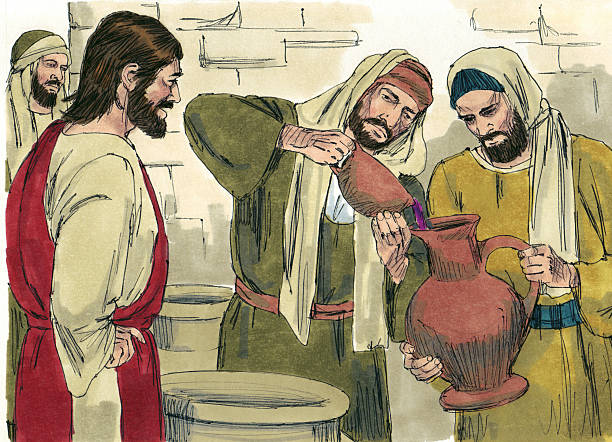
The first miracle of Jesus—turning water into wine at the wedding in Cana (John 2:1-11)—is a powerful sign of God’s provision, transformation, and the joy found in Christ. This miracle also reflects the work of the Holy Spirit, whose gifts enable believers to serve and glorify God

Just as Jesus transformed ordinary water into exquisite wine, He can transform our lives. He can take our brokenness, our struggles, and our limitations and turn them into something beautiful and meaningful.

The miracle at Cana wasn't about scarcity, but about abundance. Jesus provided more than enough, ensuring that the celebration could continue joyfully. This reminds us that God's blessings are overflowing and that we can trust in His provision.

The wedding feast was a time of celebration, and Jesus' miracle enhanced that joy. This reminds us that God desires us to experience joy and fulfilment in our lives.

Just as Jesus performed miracles through His own power, He empowers us to live abundant lives through the gifts of the Holy Spirit. These gifts, such as wisdom, knowledge, faith, healing, and love, are not meant to be hoarded but to be shared with the world.

The Holy Spirit gives us the strength and courage to overcome challenges, to love others unconditionally, and to be witnesses of God's love in the world.

The gifts of the Spirit can transform us into the people God created us to be, enabling us to live lives of purpose and meaning.

Just as the miracle at Cana provided an abundance of wine, the gifts of the Spirit offer us an abundance of grace, love, and joy.

The miracle at Cana and the gifts of the Holy Spirit are a reminder that God desires to bless us abundantly and to empower us to live lives of joy, purpose, and meaning. Let us open our hearts to His grace and allow Him to transform us and use us to bless the world.


Sunday, January 5, 2025

Second Sunday After Christmas

Jesus - Light of the World

 The Christmas season is over and the decorations might be coming down. We need to know that the light that Christ gave is always on. It continues to shine brightly. Jesus is the light of the world who came to provide us love, joy, peace, hope and salvation (John 8: 12). He gives His salvation to the ones who believes in Him.

Since we have celebrated Christmas, the birthday of Jesus, it doesn’t mean that it is just another historical event. His birth is a revelation of God’s love to transform our lives. He came to bring the light of God’s glory into this dark world.

After the first sin, the world as you know became sinful and corrupted. This world has been under the attack and curse of demonic powers. God gave different ways for people to come out of this bondage, but they were not able to because of their sins. Finally, at the appointed time, as prophesized, He sent His beloved son Jesus to the world as a human child, suffered all the problems that humans suffer, but He kept himself pure, and finally He took all the punishment for the sins which all of us did.

Jesus reminds us that it is vain to go behind any idols for our peace, but God himself came in search for us to give us peace.

When we understand the sacrifice He had done for us even after he obeyed all the laws, we have to acknowledge Him and His salvation. Anyone can believe in Jesus, even satan knows about Jesus. But salvation and hope are given to a person who acknowledges his sins, and believes that there is no way to come out of these sins, even sacrifices won’t be able to make us pure. Salvation is received when you repent your sins in front of God and accept the fact that Christ took the punishment for your sins and because of Christ’s sacrifice for your sins, you are cleansed by His blood and because you are cleansed by His blood you become righteous before God. There is no need to go anywhere to get the salvation. You need to be where you are and accept this fact and sin no more.

Once you are saved, through Jesus you receive grace to overcome sin and truth to guide your paths in this confusing and sinful world. The moment you are saved, it’s your duty to be beacons of light in this world, reflecting love and compassion to those around.

I pray that in this new year, you will reflect this light that Christ gave and walk through the joy and sorrows and invite everyone to have this light and eternal life. May The Lord bless you.

Wednesday, January 1, 2025

The Holy Name - New Year Blessings - 2025


"Therefore God has highly exalted him and bestowed on him the name that is above every name, so that at the name of Jesus every knee should bow, in heaven and on earth and under the earth, and every tongue confess that Jesus Christ is Lord, to the glory of God the Father."
— Philippians 2:9-11


Monday, January 1, 2024

Message - Happy New Year


  In this New Year, may the Lord’s Grace and mercy be upon your life.

Do you not know that your bodies are temples of the Holy Spirit, who is in you, whom you have received from God? You are not your own; you were bought at a price. Therefore, honor God with your bodies– 1 Corinthians 6: 19-20

When you look on the past year, you might be having some pleasant or unpleasant memories. But whatever may be, consider this new year as another day in your life and move on.

People take resolutions and plans for the year, but it may fade within some days. Consider this year as one in which you can manage your time properly, do some daily physical workouts and load food into your body at proper time.


 If you manage your time, you will be able to do some workouts daily. There is no need to enroll in a gym or running club. Just some basic full body workouts which you can get from YouTube will be fine.


  Taking food at right time is very challenging. But once you do it, you will be energetic to go forward without any tiredness, which will ultimately help you to achieve your goals for the day.

As the verse mentions that our body is the temple of God, we need to keep it well physically and spiritually.

Keeping our body physically fit is a challenge to everyone as you need to reserve time for exercises and be disciplined in your diet.

Keeping Spiritually fit is the very easiest job you can ever do. There is no need to do any physical activities to reach God. Wherever you are, whatever you are doing, just repent your sins and accept the fact that your sins were carried by Jesus Christ on the cross and when you confess Christ as your saviour you are forgiven and made new.


  When you accept Christ as your saviour and decide not to sin anymore, your spiritual refreshment works powerfully and you will stay strong spiritually. This need to be done every day because your enemy, the devil will always plan and plot to push you into sin.

So, this New year, take the decision to be blessed physically and spiritually. Manage time to have a talk with God, do some physical workout and have a disciplined diet.

May this year be a blessed one for you and your dear ones. A Very Blessed New Year.