Wednesday, March 7, 2018

Rules and Regulations


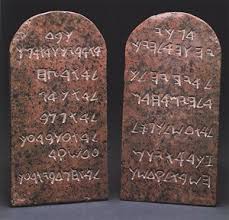
The book of Deuteronomy is a collection of orations and songs of Moses he gave as his farewell to the children of Israel. This book shows the blessings of obedience and the curse of disobedience. Everything depends on obedience – life itself, possession of the Promised Land, victory over foes, prosperity and happiness. Moses did this to remind the people what God had done for them and what they were to do to serve him when they reached the Promised Land.

As the book opens we see the children of Israel on the border of the land of Canaan, in a place where 11 days journey, some 40 years before, could have brought them. Yet it had taken them 40 years. How slowly they covered the ground. How often we have to go over the same ground again and again. We marvel at Israel’s slowness. We can rather marvel at our own. We, like they, are kept back by unbelief. We should be ashamed at the time it takes us to learn or lessons. God is a faithful teacher. He never lets us pass to another grade until we are ready.

Here God is putting before the children of Israel the conditions summed up in one great word, Obedience. The children of Israel entered the Promised Land under the conditions of Law. Moses gives the children of Israel a look back. He recalls the history of Israel and reviews their wanderings. He reminds them of Gods faithfulness and urges them to be grateful and obedient. He likens God’s care of them to a loving father who cherishes his little ones lest they should be lost in the wilderness or be injured by the heat of the sun. He supplied all their needs; they lacked nothing (Deuteronomy 2:7).

Moses repeatedly reminds them that they are a people of holy to the Lord (Deuteronomy 7:6; 14:2, 21; 26:19). Because Gods people are his, he wants them to walk in the world in the way that befits them, separating themselves from evil (Deuteronomy 14). They should show charity toward their fellow humans (Deuteronomy 15). They must gather together to worship (Deuteronomy 16).

We see Moses giving the people some solemn warnings. He first spoke of the blessings the children of Israel could enjoy if they would be obedient. He then told them the results of disobedience. Misfortune would follow them in everything they would undertake – in business, in farming and in health. They would suffer for their disobedience to God.

Deuteronomy 28 is a most remarkable chapter. It traces what Israel might have been through obedience (Deuteronomy 28:1-14) and is yet to be in the millennial age to come (Isiah 60-62; Zechariah 14:8-21; Jeremiah 31:1-9; Deuteronomy 30:1-10; Romans 11:25-31). Deuteronomy 28:47-49 refers to the Roman invasion (70 AD) which can be found in history. Deuteronomy 28: 63-67 describes the Jewish people in last century. God spoke these more than 3000 years ago.

The end of the book is the calling of Joshua. The charge that Moses gave to the people and to Joshua was built on one great fact, “The Lord is with you; be strong”. If God is present, fear is baseless.

In Deuteronomy 32, Moses closed his life’s work with a song.  After the song, in Deuteronomy 34, Moses went up to Mount Nebo (Pisgah) and there God showed him the Promised Land and there he died and Lord buried him.

In Deuteronomy 30:1-10, we see the present Israel. Everything which was said about their future got fulfilled and they cried and called the Lord and the Lord brought them back to their land. Now they are prosperous.

History and Old Testament tells about Israel’s curses and blessings. As believers of Christ, the New Testament Israel should analyse their life on what they are going through. If these curses are there in their life, do what children of Israel did – cry and call unto the Lord. Confess the sins, accept Christ as saviour and live a holy life. Whatever blessings the country of Israel is enjoying, the same can be inherited through the son of God Jesus Christ.

May God help you to analyse your life and confess before him and enjoy his blessings of salvation.

Thursday, March 1, 2018

Wilderness Wandering


It was God’s plan that the children of Israel should go straight into the land he had promised them, the land of Canaan, but the people would not. God said that all those at Kadesh over 20 years old, except Joshua and Caleb, would have to die. A new generation arose during a 40 year wandering, but at the end the nation was about as strong in numbers as the day they left Egypt.

At the start of this book we see the children of Israel in the wilderness of Sinai. The law had been given, the Tabernacle had been built and the priests had been assigned to their service. Now God was going to prepare the nation for its work. In chapter 1 and 2, God numbered and arranged the tribes, choosing and assigning duties to the priests and Levites (Chapter 3, 4). Moses was commanded to take a census.

God gave his children a cloud to guide them by day and a pillar of fire by night. They were guided a step at a time. They did not know when they were to go and when to stop, but the Ark of the Covenant (signifying God’s presence) went on before, the pillar of cloud always leading (Numbers 10:33). Sin came into this camp life as well. The people began to murmur against God. God sent judgement of fire (Numbers 11:1-3). Then they complained about their food (Numbers 11:4). As a result of their complaining, God sent them quails for 30 days. Then we see the sin of Aaron and Miriam, the brother and sister of Moses. God had chosen Moses to be the leader of this great people and Aaron and Miriam were only his assistants. Jealousy crept into their hearts. They wanted more honor and Miriam got the punishment as she was smitten with leprosy for 7 days (Numbers 12:1-16).

After one year at Mount Sinai, the Israelites journeyed to Kadesh. This is at the southern border of the Promised Land.  Afraid to enter, they turned back and wandered in the wilderness to the south and east till that generation died. After 2 years in the wilderness, people could have gone into the land of promise immediately had it not been for the sin of unbelief. They listened to the discouraging words of most of the spies. When the spies came back and told them about the giants in the lands and the high-walled cities, their hearts failed them. They would not listen to Joshua and Caleb who agreed with all that was told, but added, “We should go up and take possession of the land, for we can certainly do it” (Numbers 13:30). When they refused to enter Canaan, the door was closed to them. It meant wandering in the wilderness for 40 years. God said that he would not allow any of those who were over 20 years old to enter Canaan, except Joshua and Caleb. 11 days from the land of promise. But they turned back. They could have made 11 days of progress, but they chose 40 years of wandering. God opens doors that no human can close, and he closes doors that no human can open (Isaiah 22:22; Revelation 3:8). Their fear disqualified them to take over the land of promise. Oftentimes our fear keeps us from enjoying all that God wants to give us. We fear what others will say. We fear what might happen if we put our trust completely in Christ.

Chapter 20 describes how the people complained bitterly to Moses and Aaron and said they wished they had never been brought out of Egypt. Moses patience was at an end. The people had complained about everything. In a fit of anger he called the people rebels and instead of speaking to the rock he struck it. The water gushed out. Even though Moses disobeyed, God was faithful and kept his promise. Moses put himself up as God – “Listen, you rebels, must we bring you water out of this rock?” (Numbers 20:10). This dishonoured Jehovah God. Because Moses smote the rock a second time (Exodus 17:5,6) instead of speaking to it, he was not permitted to enter the Promise Land.

In Numbers 17, Aaron’s priesthood got questioned, so God himself was to confirm it. Moses gathered 12 staffs, one from the leader of each tribe, and placed them overnight in the tent of meeting. God put life into Aaron’s alone, causing it to sprout and bud. All authors of the religions of the world have died, even Christ died. But only Christ was raised from the dead and exalted to be our rich high priest (Hebrews 4:14; 6:4-10).

While the people camped in Kadesh, Miriam, Moses sister died and Aaron, his brother also died. Israelites battled with the Canaanites and became discouraged. Then they grumbled because they had to march around the land of Edom instead through it. They growled again against God and against Moses because they loathed the manna (Numbers 21:5). This time God sent venomous snakes’ among the people, which caused suffering and death. After they confessed their sin, Moses prayed for deliverance of his people. God did not take away the venomous snakes, but told Moses to make a bronze snake and fasten it to a pole so that all could see it. As soon as they looked, they would live (Numbers 21:6-9).

The only way people can live is by looking to the one who took upon himself the likeness of a human and was lifted up on the cross to take the sting of death upon himself (Philippians 2:7-8). If we look on him, our saviour, we shall live (John 3:14, 15). Even though God chosed the people of Israel to be his chosen one, through the death and resurrection of Christ, the entire world got saved and become chosen, if they accept Christ Jesus.

“For the wages of sin is death, but the gift of God is eternal life in Christ Jesus our Lord” – Romans 6:23

May God help you to know Christ and be the chosen one.

Saturday, February 24, 2018

Feasts, Offerings and Jubilee


The book of Leviticus can also be called as the Book of Laws. This book insists on keeping the body holy as well as the soul. It teaches that the redeemed ones must be holy because their redeemer is holy. It shows lessons in hygiene, and sanitation for the care of the body. It also talks about the five offerings and the eight feasts to be observed by the Jewish people.

From the beginning of this book we see how Israel needs to approach God through sacrifice and walk with God by separation. Pagans bring their sacrifice to the altar of their gods, for they realize that they cannot do anything about their sin themselves. But all the sacrifices in this book point to “the Lamb of God, who takes away the sin of the world” (John 1:29). There can no fellowship between God and the sinner until sin has been dealt with’ the only way is sacrifice. “Without the shedding of blood there is no forgiveness” (Hebrew 9:22). Five offerings are described in Leviticus. Gods wants us to understand the awful reality of sin, so he asks for a sacrifice each day.

1.       Burnt Offering: “Surrender” of Christ for the world (Leviticus 1).
2.       Grain Offering: “Service” of Christ in life (Leviticus 2).
3.       Fellowship Offering: “Serenity” of Christ in life (Leviticus 3).
4.       Sin Offering: “Substitute” of Christ for sin (Leviticus 4 – 5:13).
5.       Guilt Offering: “Satisfaction” by Christ for demands of God (Leviticus 5:14 – 6:7).

As New Testament believers, what we bring is our sin; what Christ brings is the offering and the atonement for sin.

From Leviticus 8 to 10, we see the duties of the Priests. No one could bring his or her own sacrifice to God. Each one had to bring it to the priest and he in turn would offer it to God. God chose one tribe out of the twelve to care for the Tabernacle. This was the tribe of Levi. One family of Levites, Aaron’s, should be the priests. The priests had the charge of the sacrifices and were supported by the tithes of the people. The priest offered the prayers and praises and sacrifices of the people to God in their behalf. He stood for them and pleaded their cause. In Leviticus 10, we see the failure of priesthood by Aaron’s sons, Nadab and Abihu, who in turn were consumed by fire from the Lord.

Animal sacrifices are no longer necessary because all sacrifices were fulfilled in Christ. Therefore priests are no longer necessary. Christ himself is the great high priest for humanity (Hebrews 2:17; 4:15). He is the only mediator between God and humanity. No one else can come between God and humanity. We approach God through Christ Jesus and him alone (Hebrews 10:12; 7:25; John 14:6).
The sacrifices spoke of the blood that saved and the feasts spoke of the food that sustains. Five great festivals are mentioned in Leviticus 23

The feast of the Sabbath (Leviticus 23:1-3): Day of worship and rest, celebrating the finished work of God in creation (Genesis 2:2-3). Christians celebrate the first day of the week, the day our Lord arose from the grave (Luke 24:1; Acts 20:7; 1 Corinthians 16:2). Thus we celebrate the finished work of redemption.
The Feasts of the Passover (Leviticus 23:4-5) and Unleavened Bread (Leviticus 23:6): Passover spoke of redemption and was celebrated every spring time. It lasted for 1 day, but the Feast of Unleavened Bread that immediately followed lasted 7 days. Christians celebrate Easter these days.
The feasts of First Fruits (Leviticus 23:1-14) and Pentecost (Leviticus 23:15-22): Israel observer first fruits during the feast of unleavened bread. In the current calendar it comes on April – May months. This fruits typified Christ’s resurrection and ours (1 Corinthians 15:20). 50 days later Passover was observed. 50 days after Christ’s resurrection, the Holy Spirit descended upon the disciples and the Church was born. Pentecost was the birthday of the Church. Since April 1, 2018 is Easter, Christians celebrate Pentecost on May 20, 2018.
The feast of Trumpets (Leviticus 23: 23-25): this is the New Year’s Day (Rosh Hashanah) of Jewish people. They celebrate it in the fall, in September 2018. This feast points forward to the future gathering of the dispersed people of Israel (Zechariah 14:16).
Day of Atonement (Leviticus 23:26-32): This followed the feast of trumpets by 10 days. This was the most solemn day of the year of God’s chosen people. On this day the sins of the nation were confessed. Jehovah’s relationship to his people was established. This was the only day in the year when the high priest was permitted to enter the holy of holies. Jewish people it this year on September 19-20. For Christians, we can run into God’s presence at any time for Christ has made the way possible for us (Ephesians 3:12).
Feast of Tabernacles (Leviticus 23:33-36): This was the last required feast of the year. It is also called feast of Booths or ingathering. Celebrated in the fall and lasts for a week, it commemorated the time when children of Israel lived in tents during their wilderness journey from Egypt to the Promised Land, Israel. This feast recalled them that in spite of their unbelief God was faithful in caring for them and brought them to their inheritance. It comes on September 24 to October 1, 2018.
The Sabbatical Year (Leviticus 25:1-7): this was the year of meditation and devotion. It was a year of Sabbath. Every day was like the Sabbath, and the minds of the people were kept on the things of the Lord. Last Sabbatical year was on 2014 and the next one is on 2021.
The year of Jubilee (Leviticus 25:8-55): This was celebrated every 50th year. It was inaugurated on the day of Atonement with the blowing of trumpets. As in the Sabbatical year, the land was not cultivated and all slaves were freed. 2017 was an year of Jubilee.

Seven is a significant number in Leviticus.
·         Every 7th day was the Sabbath
·         Every 7th year was a sabbatical year
·         Every 7 times 7 years was followed by a year of Jubilee
·         Pentecost was 7 weeks after Passover
·         In the 7th month were the feasts of trumpet, tabernacles and atonement
·         Pentecost lasted 7 days
·         Passover also lasted for 7 days

All these feasts and years are very important to the chosen people. The years which come along the Jubilee and sabbatical years mark a special importance not only to Israel but to the entire world. In BC 538 the Jews were allowed to return to the land of Israel from Babylonia to build their Temple. In BC 333 another Jubilee year, Persian rule ended and the land was conquered by Alexander the Great. In AD 70, a year followed the Jubilee, the destruction of Jerusalem and temple happened. In 1517, a catholic priest called Martin Luther was born who challenged the hypocrisy done by the church and protestant reformation was given birth. In 1867 when the Jews were facing much persecution from the world, they were freed from Austria and Hungary. In 1917, Great Britain gave support to Jews for getting back their native land. In 1967, the famous 6 days war were the Arab nations attacked Israel and Israel’s win happened in a Jubilee year, in which Jerusalem was recaptured by Israel. 2017 was the 120th jubilee year for Israel and guess what, in 2018 the top countries are accepting Jerusalem as the capital of Israel.

If God can keep his promise for a chosen nation who did not obey him, how much more he cares for the New Testament Israel, the people who follow Jesus Christ. We don’t need to follow any feast of offering as everything had been done and finished by Christ Jesus. Our only duty is to believe and live for Christ to inherit the blessings God gave to the chosen nation.

May God enable you to follow Christ, confess your sins and accept him as your saviour so that you, as a new Israel will inherit the promises and blessing of Jehovah.

Thursday, February 22, 2018

The Rescue

The book of Exodus is the thrilling epic of God’s rescue act. It tells of the redeeming work of a sovereign God. The book gives us the story of Moses, the great hero of God. 

If the book of Genesis is a family history, the book of Exodus is a national history. After Joseph’s death a new dynasty came to the throne in Egypt and the wealth and great numbers of children of Israel made them objects of suspicion in the eyes of the Egyptians. The pharaohs reduced them to a slavery of the worst sort. The people remembered the promises God had given to Abraham and his descendants, and it made this bondage doubly hard to understand (Genesis 12:1-3). 

The story of Exodus is repeated in every soul that seeks deliverance from the enmeshing and enervating influence of the world. The plagues and the negotiations Moses had to make with Pharaoh must have lasted for nearly a year. This gave the children of Israel more time to gather their things. We study Exodus in order to see God’s way of delivering sinful people, and his gracious purposes in rescuing them.

Exodus 12 gives us the thrilling story of Passover, the clearest Old Testament picture of our individual salvation through faith in the shed blood of Jesus Christ. God had sent nine plagues on Egypt in order to make pharaoh willing to let his people go. Finally God said that the firstborn in all Egypt should die. This tenth plague would have fallen on the Israelites too, had they not killed the paschal lamb and been protected by its blood of redemption (Exodus 12: 12, 13). They left Egypt under the blood as marked people. They passed through the Red Sea as a directed determined people. God led them out and shut the door behind them. 

In Exodus 20 to 24, we see the laws given, broken and restored. The law did not make us sin, but it showed us that we are sinners. The physician comes and looks at a child and the symptoms reveal that it is sick. He gives the child some medicine for cure. The doctor did not make the child sick, but he proved that the sickness was there (Galatians 4:4, 5; Romans 8:1-4; 3:19-28).The law is God’s mirror to show us our exceeding sinfulness (Romans 7:12). Before Israel even received the law or started to keep it, they were dancing around the golden calf, and worshipping a god they had made (Exodus 32:1-10,18). 

God told Moses he wished a sanctuary or holy dwelling place that should point to Christ and tell of his person and work. Exodus 25 to 40 gives us the account of building of the Tabernacle. The Tabernacle, having the cloud of glory over it, taught the people that God was dwelling in their midst (Exodus 25:8). Tabernacle was the common center and rallying point that could be moved from time to time. 

Even though God gave his law, the mirror to analyse about them, Israel sinned and can be seen in the history how they got the punishment. But God did not give up on them. As he promised he called them back and now they are a powerful nation. The people who follow Jesus Christ are called New Israelites. Same is applied for New Israel. Whatever blessings God pronounced on Israel will come upon them as well. Of course Law is there. But since Christ obeyed the law faithfully and died for our sins, believing in Christ is the qualification for us to become the New Israel.

May God help you and bless you to be the chosen New Israel through Christ Jesus.

Thursday, February 15, 2018

Book of Beginnings


Genesis tells us the beginning of everything except God. Another thing to notice is that it tells only of beginnings. There is no finality here. It gives us at least 2000 years of record. It is not entirely history; it is a spiritual interpretation of history.

In chapter 1 we have the account of creation in outline and in chapter 2 part of the same in detail. The detail concerns the creation of humanity, for the Bible is the history of the redemption of humanity. God created people in his own image to have fellowship with himself. 

Adam and Eve were created in a state of innocence but with the power of choice. They were tested under the most favourable circumstances. They were endowed with clear minds and pure hearts, with the ability to do right. God gave them his own presence and fellowship (Genesis 3:8). But they yielded to the temptation and failed the test. Sin entered the world. Satan still influences people to disobey God. Adam and Eve were separated from God, the ground was cursed and sorrow filled their hearts. 

In mercy, God promised one who would redeem us from sin (Genesis 3:15). The offspring of the woman (Jesus) would come to destroy the works of the devil (1 John 3:8).

Immediately after the fall, people began to offer sacrifices which were ordered by God unto him. These were for the purpose of keeping before people the fact of their fall and of the coming sacrifice of Jesus. 

Two of Adam’s sons. Cain and Abel, brought their sacrifices unto the Lord (Genesis 4:3, 4). Abel’s offering was accepted while Cain’s was rejected. Any sacrifice brought to the Lord must be done so with proper motivation and through faith and obedience. Cain became angry with his brother Abel and in his wrath killed him. 

Long before God gave the law to Moses (Exodus 20), we find several very definite ordinances given in the book of Genesis. At the very beginning God instituted the Sabbath (Genesis 2:1-3) and marriage (Genesis 2:24). The law of the tithe was also observed (Genesis 14:20). 

The account of the flood (Genesis 5-9) in Bible is very plain and straightforward. Evil had grown rampant. It threatened to destroy everything that was good. Only one righteous man remained, Noah. God sent the flood to restore good upon the earth. God was going to separate the righteous from the wicked. He was taking the first step toward a chosen nation. Noah had warned them for 120 years while he was building the ark. Noah was saved from the flood by the Ark (example of Christ, our Ark of safety). When he came out, the first thing he did was to erect an alter and worship God (Genesis 8:20).

After the flood the world was given a new start. But instead of spreading out and reopening the earth as God had commanded, they built the great tower of Babel in defiance of God (Genesis 10-11). They thought they could reach heaven by their own effort. God sent a confusion of tongues and scattered them. 

In spite of the wickedness of the human heart, God wanted to show his grace. He wanted a chosen people to whom he might entrust the Holy Scriptures, to be his witness to the other nations and through whom the promised Messiah could come. He called a man named Abram (Genesis 12-38) to leave his home in idolatrous Ur of the Chaldees to go to an unknown land where God would make him the father of a mighty nation (Genesis 12:1-3; Hebrews 11:8-19). This begins the history of God’s chosen people, Israel. Abraham was called “God’s friend” (James 2:23). God made a covenant with him that he should be the father of a great nation and that through him the nations of the earth would be blessed (Genesis 12:1-3). 
 
Through Isaac, Abraham’s son, the promises of God were passed down to Jacob, who, despite his many faults, valued God’s covenant blessing. His name was changed to Israel, a prince with God (Genesis 32:28). This is the name by which God’s chosen people were called – Israelites. His twelve sons became the heads of the twelve tribes of Israel (Genesis 49). 

Joseph is one of the outstanding noble characters of the Old Testament (Genesis 39-50). It was through Joseph that Jacob’s (Israel) family was transplanted into Egypt. He was sold as a slave at seventeen. At thirty he became prime minister in Egypt and ten years later his father, Jacob (Israel), entered Egypt. 

God knew it was necessary that the Israelites leave Canaan until they had developed national strength so they would take possession of the land of Canaan. God wanted to safeguard them against mingling and intermarrying with the idolatrous peoples then in the land. The book of Genesis ends with the dying words of Jacob (Israel). We see the promise to Judah of a descendant who is to be the coming ruler. Christ is called the Lion of the tribe of Judah (Revelation 5:5).

In the first book of Bible itself God called his chosen people whom he blessed and prospered. The chosen people were called Israel. Even the only tribe (Israel) in the history who survived were attacked 52 times, captures and recaptured 44 times, besieged 23 times and destroyed twice; God restored it to be one of the most powerful nations in the world today. This blessings and prosperity is given to us through Christ Jesus, when we accept him as our personal saviour and leave the evil world and follow him. I pray that the spirit of God will help you to understand the mystery about the new Israel who are the followers of Christ Jesus, and help you also to be a genuine follower of Jesus.

Friday, January 26, 2018

The Mystery

Mystery means something is hidden until the appropriate time comes for God to reveal it.

God created Adam and Eve, and their generations spread throughout the Earth. But these people became sinners and wicked (Genesis 6:5; Mathew 24:38).
God chosed Noah as he did everything according to the will of God. His generation multiplied and they also became wicked people who worshipped pagan gods.

So God chosed a person called Abraham. He was old and was not having children. But God called him and told him that he is going to have a child and his offspring’s will be like stars in the sky. Abraham believed in God and God counted him as righteous because of his faith (Romans 4:3; Genesis 15:6; Galatians 3:6).
Through his wife Sarah, Abraham got a child Isaac and Isaac had two sons through Rebekah – Esau and Jacob. Even though Jacob was a deceiver, at one point of time God called him and changed his name to Israel (Genesis 32:28). So God started blessing the offspring of Israel (Genesis 22:18; Genesis 35). Even though the people of Israel were not obedient to God, He did not leave them.

Through prophets God blessed Israel. In Isaiah 60:1-6, God is prophesying about future glory of Israel. He tells people will come to you with gold. Israel is blessed even today.

In New Testament, Paul tells in Ephesians 3:1-12, the great privileges in the gospel not only belong to Jews, but to the believing gentiles, even though they are not circumcised. He tells it as a Mystery of God. The mystery is that the gentiles should be fellow heirs, and of the same body, and partakers of his promise in Christ, by the gospel.
Paul tells in Ephesians 3:9, his business was to make all men see what is the fellowship of mystery which from the beginning of the world hath been hidden in God who created all things through Jesus. It is a mystery of Christ because it was revealed by him (Acts 26:16-18; Galatians 1:12).

In Old Testament we see Jews as the chosen people. When Jesus Christ came into this world as a child, gentiles came to him as wise men (Mathew 2:1-12). The respect paid to Christ by these gentiles was a happy specimen of what would follow when those who are afar off should be made high by Christ.

Christianity does not begin with “once upon a time”, but starts with Bethlehem in Judea. Jesus is not just another man, but that he was descended from a royal family, and there was a King’s blood in his veins (Mathew 2:6). Wise men, the gentile came to worship and honour a King. They did not come to see a saviour, but a King (Mathew 2:2).

In Psalms 72:1-11, we see certain characteristics of a King. In this Psalm, even though Solomon’s name is mentioned, Christ’s Kingdom is being prophesied. He has the authority which is being given by father and he is a righteous King. All the verse in this Psalm depends on the first verse – “Give righteousness to the King’s son”. In verse 3 we see prosperity as a by-product of righteousness. In verse 8 we see Solomon wants to extend the kingdom whole on Earth, which only Christ can when he comes a second time. In verse 10 and 11, all kings came and bow before him. Even though Solomon failed to go to gentiles, in the new kingdom gentiles will come, through this Mystery of God. Till verse 17 we see how kingdom will be of Jesus Christ.

In the Old Testament God held back from the gentiles the secret that they should be heirs and shareholders of the gospel and have admission into the church (his body) on the same terms as the Jewish people (Ephesians 1:10).

Difference here is that gentiles are being chosen by faith in Christ Jesus. We as gentiles don’t want to do any physical method to be the chosen ones like the Jews. We need to do is accept Christ as our King and saviour and believe that he died for our sins ad we are made righteous through his blood.
When you believe this in your heart and soul, you are saved and is a new creation in Christ Jesus, and are heirs and shareholders of his body.

All gentiles are being chosen by faith (Romans 15:9,10; Galatians 3:8,9). Once you are chosen, you enjoy the life in the temple of God and are yielded into obedience to him.


We are saved by faith, not of good works. We are saved to do good works.